-
Talking About Suicide: A Blog by Lindsay Mesa
- Recognizing Suicide Prevention Awareness Month
- Reflections from Hula Story Sessions: Understanding Suicide
- 2025 Vermont Suicide Prevention Symposium
- A Permanent Home for Soteria: Construction Progress
-
October Crossing Paths Tours
- Welcome Home to Nine Vermonters!
|
|
|
Talking About Suicide: A Blog by Lindsay Mesa
|
|
|
|
My dad died by suicide in May of 2010. He died after an intense battle with thoughts of suicide. His battle started long before I became aware of it – long before I even existed. But to me, it felt like over a span of 8 months, the person that I had known all my life changed before my eyes, becoming unrecognizable. I knew my dad was struggling with thoughts of suicide, but I didn’t talk with him about it. |
|
|
There didn’t exist for me a paradigm with which to do it. I wasn’t the expert. What if I said the wrong thing? What if I made it worse? I was just his kid.
After he died, my family didn’t know how to talk about it. We so desperately wanted to, but how? We were calling his death an “accident.” It felt like the respectful thing to do. To not risk coloring his memory. To not ask anyone else to hold the pain of the truth.
My experience grieving my father does not make me an expert in suicide. But it is a fundamental part of who I am now. The experiences surrounding losing my dad to suicide cracked me open; they shook my foundation such that I wasn’t able to continue the way I’d been. And from that very vulnerable place, the one searching for any available path, I was privileged to find community at Pathways and to be introduced to peer support. And through peer support, I stumbled into a way to talk about suicide.
In peer support, we often use the metaphor of an iceberg. I can still remember the first time I saw a trainer scrawling the craggly shape across a whiteboard. Its rough edges peaking above the surface of the water, all this expansiveness underneath.
One way to think about talking to someone about suicide is to see the statement “I want to die” as the tip of the iceberg - the part that is above the surface.
So often when it comes to suicide, we get stuck at the tip of the iceberg. If someone attempts to die by suicide, voices they’re thinking of it, or if we’re afraid that may be the case - we respond by having conversations about not dying. If the surface statement is “I want to die,” the response becomes “Don’t die.” The conversation becomes about not dying.
It makes sense that this happens. The idea of losing someone to suicide is deeply painful. When someone is thinking of dying this way, it makes sense that we want to do everything we can to keep the person with us - to keep them alive. It makes sense, too, that we want to convince the other person to want to live. We pour forth all the reasons why someone’s life matters, all they have to live for. We try to instill hope.
What I’ve come to understand, however, is that for many people who are thinking about dying by suicide - dying is not actually the problem. In fact, dying may feel like the solution to the problem. Maybe the only solution the person can identify. So if we get stuck here, at the tip of the iceberg, talking about dying - we’re not actually talking about the problem. That keeps us stuck. Even when we are successful at keeping the person alive for the moment, we’re not getting at the root of why they don’t want to live.
This is why the iceberg matters. If you’re talking about what’s beneath the surface, you’re having a different conversation. |
|
|
Recognizing Suicide Prevention Awareness Month
|
|
|
At Pathways Vermont, we aim to provide innovative mental health services and collaborative learning that foster choice, connection, and community. Our programs and services are person-centered, driven by the values of mutuality, respect, compassion, and individual choice and self-determination. This month is Suicide Prevention Awareness Month, a time to create awareness and reflect on the current state of suicide in our state and the country. Pathways Vermont is, at its core, a mental health organization that is committed to creating alternatives in mental health care that place the individual in the driver's seat. We approach this work as peers, drawing on our lived experience to inform our conversations and interactions with those we serve.
We approach conversations about suicide in the same way. We see conversations about suicide as opportunities to build genuine connection. Instead of immediately shifting to risk assessment or intervention, we prioritize curiosity, validation, and compassion, recognizing that suicidal thoughts are a real and common part of the human experience.
The dominant approach to suicide often frames it as a crisis requiring urgent risk management. This can disrupt meaningful connection and, in some cases, cause more harm than good, leading to involuntary, forced treatment. Rather than focusing solely on preventing suicide at all costs, we choose to nurture relationships, believing that connection itself is a powerful force in helping individuals explore their experiences, find understanding, and create meaning in their lives.
Learn more about our approach here. |
| |
Reflections from Hula Story Sessions: Understanding Suicide |
|
|
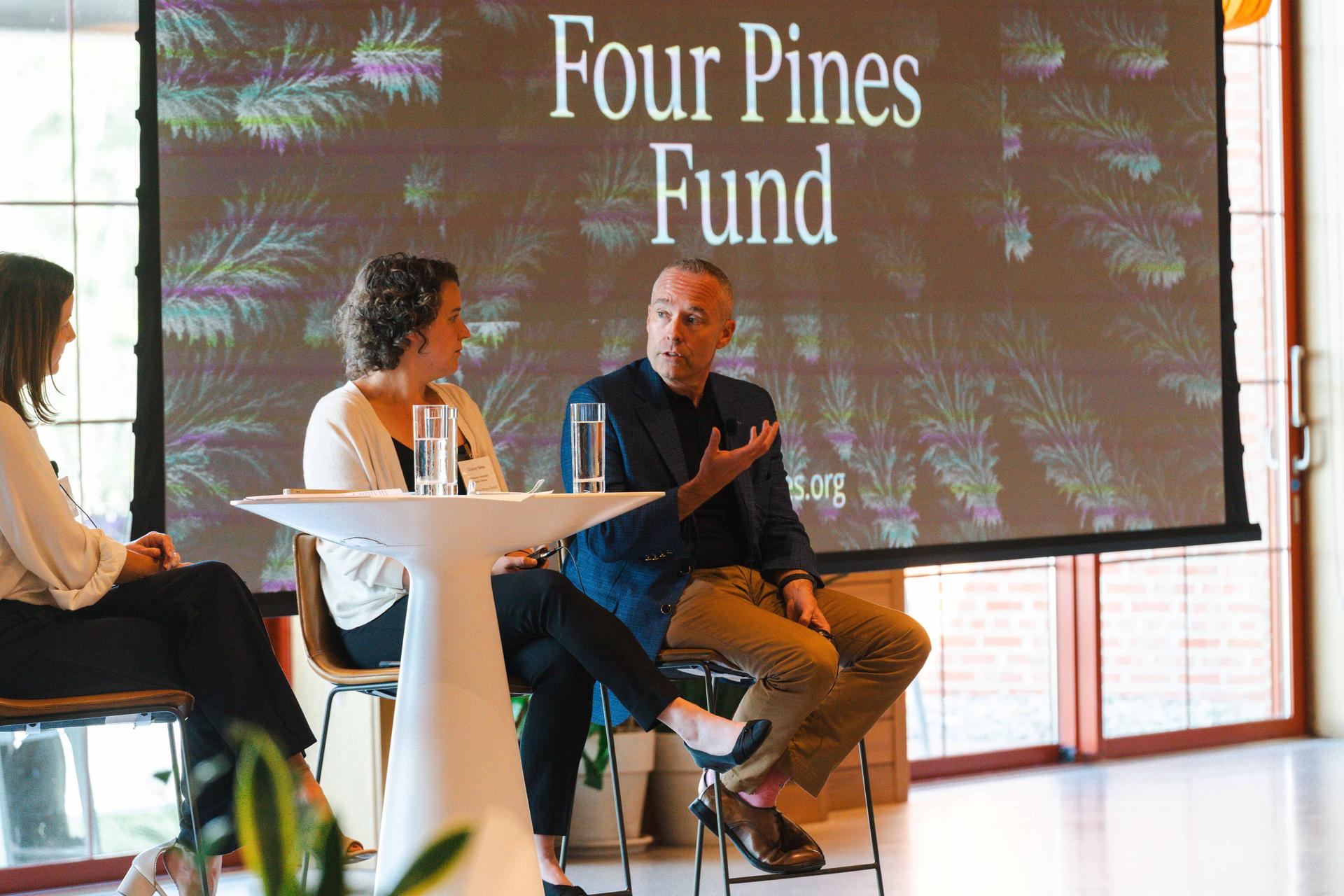
Earlier this month, Lindsay Mesa, Training Manager at Pathways, had the opportunity to participate in a panel discussion with the Four Pines Fund as part of the Hula Story Sessions series. Four Pines work was being showcased as part of Suicide Prevention Awareness Month, and for the amazing work their foundation is doing to support greater access to effective care for people thinking of suicide.
We were inspired to be in a room of such brilliant minds and compassionate hearts - many of whom have dedicated their time, careers, and resources to the topic of suicide. Lindsay was joined on the panel by Dr. Craig Bryan, a board-certified clinical psychologist in cognitive behavioral psychology, and the Director of the upcoming Suicide Care Clinic at the University of Vermont Medical Center. Alison Kromf, Director of Vermont Strategy at Four Pines Fund, facilitated the conversation.
Together, they shared with the group some of the systemic barriers that get in the way of talking about suicide, as well as some of the innovations and practices that are evolving how we think about supporting people considering suicide.
We were so grateful to speak with so many folks after the event who shared their thoughts, experiences, and desire to show up for and support the people in their lives.
We truly believe these kinds of community conversations are a foundational part of what it takes to create lasting change in our communities. If you’re interested in our Conversations about Suicide training, please reach out to [email protected] to learn more.
A special thank you to Josh Wallace for the great photo! Please see below for some resources for continuing the conversation about suicide. |
|
|
Vermont Suicide Prevention Symposium |
|
|
| Pathways Vermont was pleased to be a sponsor of this year's Vermont Suicide Prevention Symposium on September 11th at the DoubleTree in South Burlington!
The day consisted of keynote speakers and sessions that explored mental health, suicide, and how we all show up in this work. We were glad to have had the opportunity to share Pathways materials at our table and help shed light on the programs and resources we have available for someone who may be experiencing thoughts of suicide or supporting someone who may be. |
|
|
A Permanent Home for Soteria: Construction Progress |
|
|
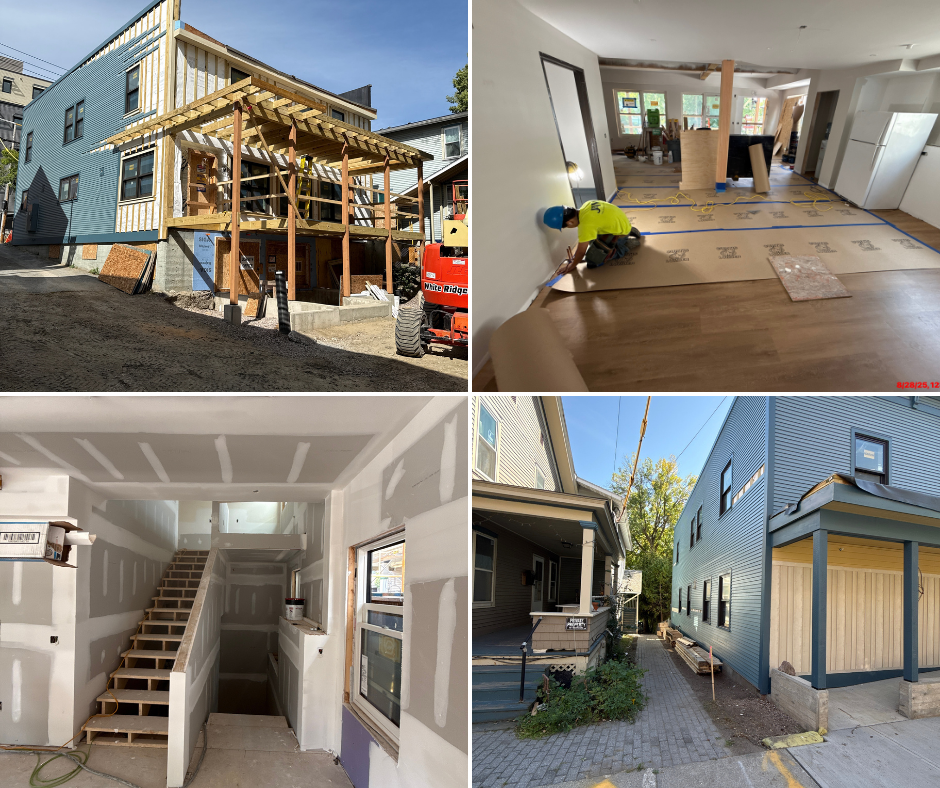
Construction at our new permanent home for Soteria is moving quickly as we enter the final stages of making this house feel like a home. We are pleased to share these photos, which highlight the wonderful progress made by the team at JA Morrissey. You can learn more about this innovative project and what we need to fill the gaps by clicking the button below.
You can donate online, via Venmo (@pathwaysvermont), or by sending a check to: Pathways Vermont, Attn: Development, 1 Kennedy Drive, Suite 2, South Burlington, VT 05403. Please indicate that you’d like your donation designated to Soteria House.
Thank you for your support in bringing this important program permanently home. |
|
|
October Crossing Paths Tours |
|
|
The Development Team is hitting the road again in October and November with two Crossing Paths Tours in Barre! Crossing Paths Tours are a great way to learn more about Pathways Vermont and the many programs and services we provide. Please see below for details about our two upcoming dates. 1. 10/28/25 from 5 - 6 pm at the Hedding United Methodist Church (40 Washington St, Barre)
2. 11/13/25 from 5 - 6 pm at the Barre Congregational Church (35 Church St, Barre) Keep an eye on the Crossing Paths Tours page of our website for more dates in your area. Email [email protected] to RSVP. We look forward to seeing you there! |
|
|
Welcome Home to 9 Vermonters! |
|
|
This month, our staff across the state handed over the keys to welcome home nine Vermonters. Our staff are passionate and committed to those we serve, and we are so grateful for them each and every day. |
|
|
Your donation today will make a positive impact!
We are truly grateful to everyone who supports Pathways! Your dedicated support is transforming people's lives. Thank you! |
| |
Our Contact Information
*{{Organization Name}}*
*{{Organization Address}}*
*{{Organization Phone}}*
*{{Organization Website}}*
*{{Unsubscribe}}* |
| |
|
|