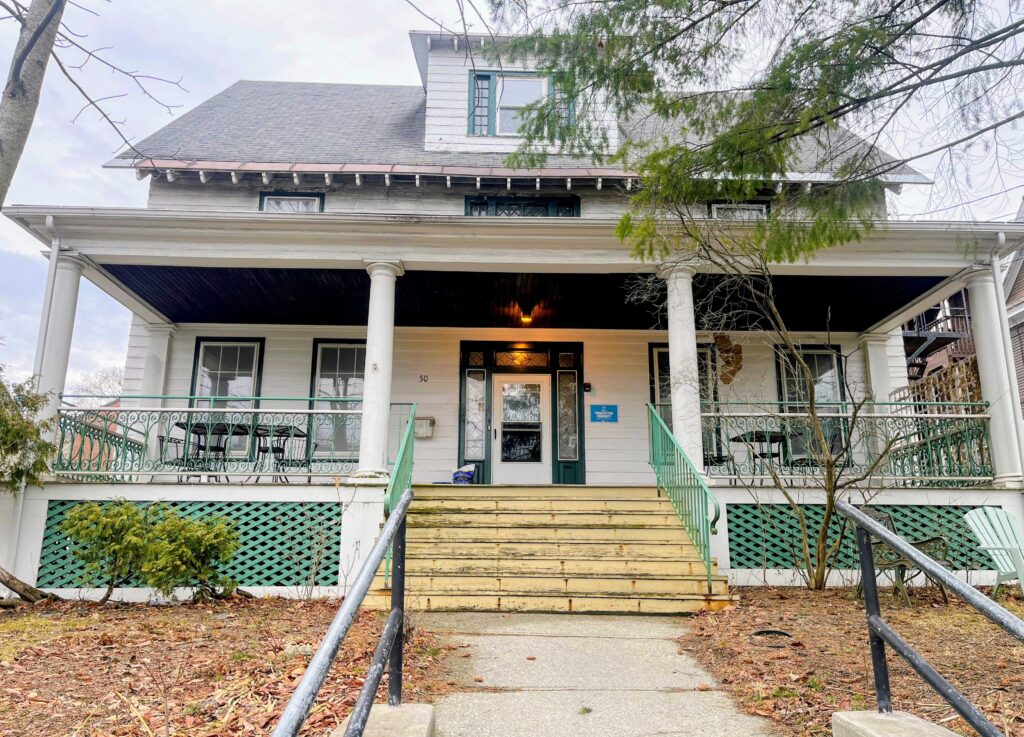
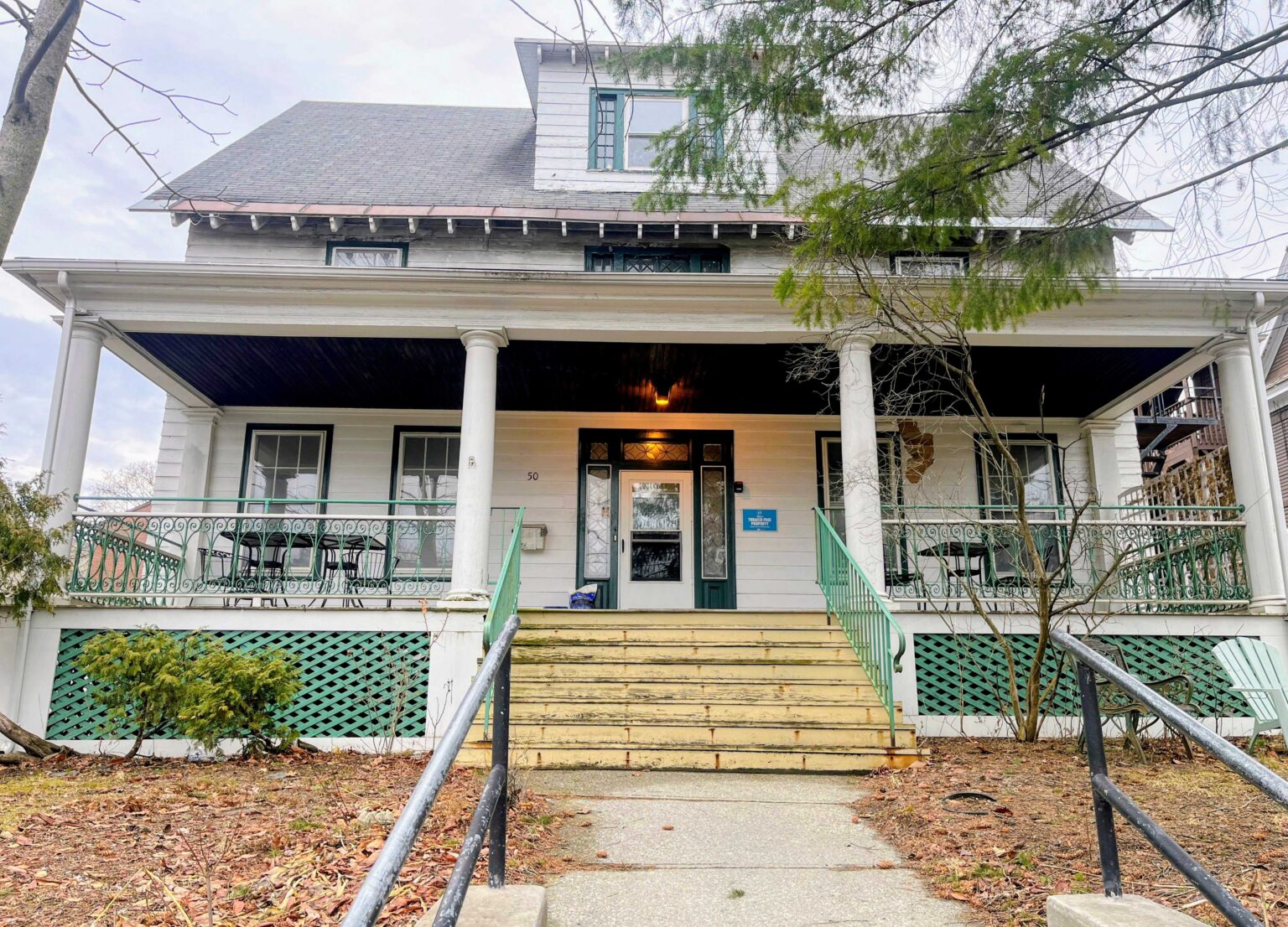
Pathways Vermont Peer Support Center, known as Morgan’s Place, provides a warm and welcoming space for support groups and community events, where lived experiences are shared, and relationships are nurtured.
The Center honors the legacy of Steven Morgan, whose career in mental health peer support spanned nearly two decades. He played a key role in developing Soteria House, helped launch a peer-run respite program, served as one of the first board members of Pathways Vermont, and led Another Way as Executive Director. Through all of these roles, Steven devoted himself to creating supportive communities where people experiencing mental health challenges could find connection, understanding, and hope.
We recently sat down with James Ramey, Peer Support Center and Rapid Re-Housing Team Lead, and Chloe-Lucia Alexander, Morgan’s Place Supervisor, who have both been instrumental in the center’s relocation and fresh programming.
How has the process been going with getting Morgan’s Place set up and officially operating?
The most important thing for us has been getting our groups running consistently. We want Morgan’s Place to be a comforting environment, a place where you can just relax, step away from the stress of a recent eviction notice, and break out of the isolating routines that can sometimes accompany substance use or mental health struggles. There’s a real privilege in being able to restart, in a sense, and visualize our goals for this program to ensure it truly meets people’s needs.
We’re really honing in on peer support, and instead of traditional drop-in hours, we’re filling the schedule with a diverse range of structured groups. Right now, that includes everything from Dungeons & Dragons and an Anime Group to Open Studio with the Howard Center Arts Collective and Conversations About Suicide.
We’ve also introduced a skill-share group. Recently, a community member came in to teach us all about beavers, which is something they’re incredibly passionate about! Our latest session focused on hand-sewing and mending. It was a beautiful way to learn a new skill while connecting with like-minded, creative people. It’s special to walk into a space and share your passion with others who are eager to listen and learn. In time, we hope even more community members will step up and say, “Hey, I have this thing I’d love to share.”
Currently, we’re building a schedule of support groups and skill-shares running from 12:00 PM to 8:00 PM, Monday through Friday, along with some weekend events. We’re mostly seeing 18- to 35-year-olds in the space, and we’ve found the most success in the evenings and on weekends, so we’re tailoring our hours to when folks are actually available. Ideally, we want people to come by, see what we’re doing, experience a group that supports them with what they want and their goals, and set up one-on-ones to just kind of check in.
How do you advertise, and how do you keep first-timers coming back?
Right now, our return rate is high. Our main goal is simply to meet people where they’re at. It’s crucial for 18- to 35-year-olds to know that a space like this exists: it’s entirely free, and it offers the chance to have real conversations with people who have lived experience and training in navigating difficult subjects. That kind of support is phenomenal and rare.
We have a lot of capacity right now to shape this space based on what people actually want. For example, if a group of folks wants to play Scrabble every Friday at 5:00 PM, we can probably make that happen. We’ve also noticed a strong need for ongoing, lower-level support. Many young adults age out of youth services and are looking for something extra that doesn’t just leave them behind. Establishing ourselves as an organization that can bridge that gap is incredibly valuable.
There are zero qualifications for entry other than being over 18, and there’s no paperwork to fill out. Across the board, Pathways programs are designed to be low-barrier. Everything here is free, which instantly removes a barrier for so many people. There’s also a level of anonymity here that you just don’t find in other clinical or community settings. People can engage at their own comfort level, which really helps reduce the anxiety that often comes with trying to access community support. We just want people to show up exactly as they are.
What do you think is the most important thing about the Peer Support Center?
If we do this right, the peer support center can be a kind of magnet for people, both those who need it and those who practice it, and the exchange of ideas about what all that means is really exciting. Ultimately, the most important thing this space provides is an environment where anyone can experience life with less judgment.
My hope is that we offer a profound sense of, “Okay, I am not alone in what I’m going through.” It’s a mutual agreement of care. It’s a two-way street: you’re sharing, I’m sharing, and we’re working together. That dynamic is drastically different from traditional models and naturally strips away much of the judgment.
The beauty of offering such a wide variety of groups is the power of choice. If you don’t have the energy to talk at a traditional support group, you can still show up and join a lower-pressure activity that requires less verbal engagement. We are so excited about the variety of programming we have now, and we can’t wait to see how Morgan’s Place continues to grow and evolve.
To learn more about Morgan’s Place, visit the Morgan’s Place page on our website, and access the community calendar here, which provides a full look at the weekly offerings happening in the space.